Bikinis: How to Choose One That Fits
Every bikini customer runs into the same three problems: a top that slips, bottoms that dig in, and fabric that goes limp after a few weeks. Most of it comes down to measuring properly and reading the label before anything else. A bikini that fits well should stay put during a 30-minute swim and still feel comfortable after four hours on a sun lounger.
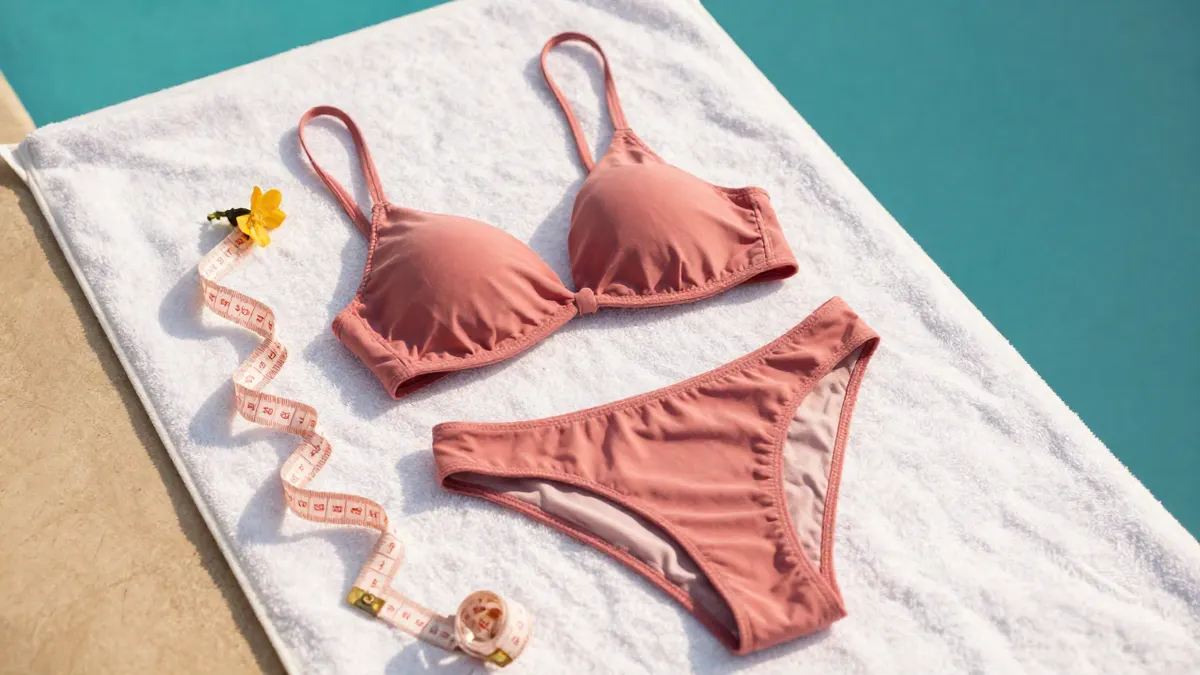
Measurements every bikini customer should take
Use a soft tape and measure three spots. Bust at the fullest point, underbust just below it, and hips at the widest part, usually 20 to 23 cm below the waist.
Brands cut differently, so compare your numbers with each size chart. A European 38 can be a small in one chart and a medium in another. Check the chart every time.
If you sit between sizes, go up for the bottoms and down for a tied top. Ties let you adjust, while fixed hooks do not.
Bikini top styles and who they suit
Triangle tops
The easiest to adjust, thanks to sliding or tied cups. They suit small to medium busts and work well for lying in the sun, though they give little support for swimming laps.
Bandeau and underwire tops
A bandeau avoids strap lines and is good for tanning. For a bust above a C cup, an underwire or molded cup with a wide band gives far better hold. Choose a band at least 2 cm wide.
Sporty crop tops
Best for surfing, paddleboarding or active family beach days. They stay in place in waves.
Bikini bottoms: cut and coverage
Brazilian cuts show more of the hip. High-waisted bottoms cover the navel and feel secure, which makes them a popular pick for people who want a more retro look. Classic briefs sit in the middle.
Side ties are easy to adjust but can leave marks after long sitting. A flat, bonded edge is more comfortable in that case.
Two popular examples of the two-piece shape are the Marigold bikini, which leans on a soft, simple cut, and the Heaven bikini, which suits people who like a more defined top. Looking at both shows how much a small change in strap width or rise changes the fit.
Fabric, lining and sun protection
Look for nylon or recycled polyester blended with 15 to 20 percent elastane. Under 10 percent, the suit loses shape fast. Above 25 percent, it can feel tight and take longer to dry.
A full lining matters, especially in light colors. Pale fabric can turn see-through when wet if it is single layer. Hold it up to a window before you trust it.
Most swimwear fabric offers some UV protection, often rated around UPF 50 on labeled items, but that rating weakens as the fabric stretches and ages. Sunscreen is still needed.
Caring for a bikini so it lasts
Rinse in cool fresh water after every swim. Chlorine and salt break down elastane within a season if left on the fabric.
Hand wash with a mild soap, never wring, and dry flat in the shade. A dryer or direct sun fades color and loosens the stretch. Treated this way, a good bikini usually lasts two to three summers.
Rotate between two sets if you swim several times a week. The elastic recovers between wears.
When a one piece is the better call
If you want more support for swimming, or less worry about movement, one piece swimsuits are often simpler. They stay put, cover more, and suit anyone who dislikes adjusting straps. To compare across styles, browse all swimwear products and note the fabric details of each.
Frequently Asked Questions
How tight should a bikini feel?
You should fit one finger under the band or edge, no more. If skin bulges or leaves deep marks after ten minutes, go up a size.
Can I wear a bikini in a chlorinated pool every day?
Yes, but it will age faster. Rinse right after swimming and consider a chlorine-resistant fabric if you swim more than three times a week.
Why does my bikini top keep sliding up?
The band is probably too loose or the cups too small. Try a smaller band size with a larger cup, or switch to a style with a back hook rather than a single tie.
How do I stop colors from fading?
Avoid long hours of direct sun while wet, and dry the suit in shade. Skip fabric softener, which coats fibers and weakens stretch.