Bikini Products: A Practical Guide to Styles, Fabrics and Fit
Bikini products cover more than two pieces of fabric. A full beach kit usually means a top, a bottom, a cover-up, sunglasses and a bag, and each part has choices that change comfort a lot. This page walks through them in the order you would think about them, from cut to care.
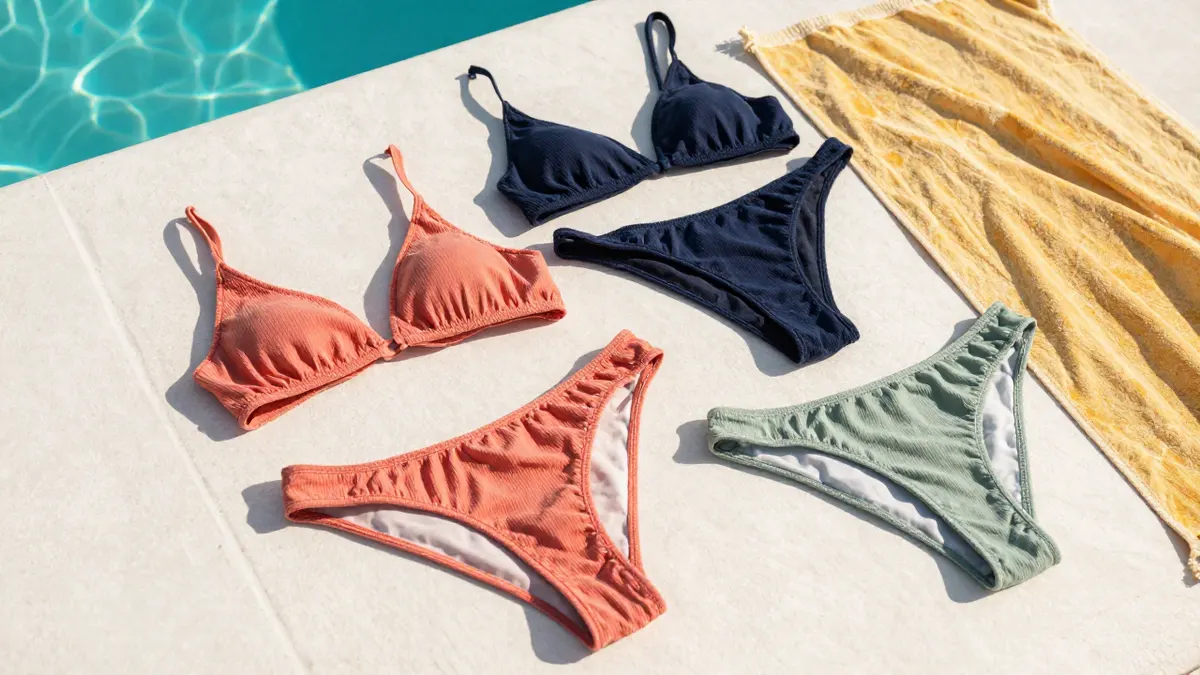
Bikini Products by Type of Top
The top decides how much support you get. Pick it first.
- Triangle tops: adjustable ties, easy to resize, little support. Best for cup sizes A to C.
- Bandeau tops: no neck strap, so fewer tan lines. Many have silicone grip, but they slip when you swim hard.
- Underwire tops: closest to a regular bra. A better choice from a D cup upward.
- Bralette and sporty tops: wide straps and a firm band, good for surfing, paddleboarding and beach volleyball.
If you plan to swim laps or play in waves, skip the bandeau. A sporty top with a back clasp stays put far more reliably than a single knot.
Bottoms: Cut and Coverage
Bottoms come in four common shapes. Thong and Brazilian cuts show the most skin. Classic bikini bottoms sit on the hip and cover around two thirds of the rear. High-waisted bottoms rise to or above the navel and tend to feel secure, which is why they are popular for active days.
Side ties are handy because you can adjust the fit as your body changes through the day or the season. Fixed-side bottoms are neater and last longer, since knots wear the cord over time.
Which cut suits which activity
For lounging, anything goes. For swimming and sport, choose a mid or high rise with a wider side band of about 3 to 5 cm. For travel with limited luggage, a reversible bottom gives you two looks from one piece.
Fabrics and Sun Protection
Most swimwear is a blend of nylon or recycled polyamide with 15 to 20 percent elastane. Polyester blends resist chlorine better, so they suit pool use. Nylon feels softer but fades faster in salt water and strong sun.
Look for a lining in the front of both pieces. Unlined light colours can turn see-through when wet. A UPF 50 rating blocks about 98 percent of UV rays, but only where the fabric covers you, so sunscreen is still needed on the rest of the body.
Ribbed and textured fabrics hide wrinkles and look good out of the water. Crochet and knit pieces are pretty but dry slowly and stretch when soaked, so treat them as beach wear more than swim wear.
Sizing and Fit Checks
Sizes vary a lot between labels, so measure bust, waist and hips and compare with each size chart. A good fit means no gaping at the cup edge, no digging at the hip and a band that does not ride up when you raise your arms.
Try this at home: lean forward, twist and lift your arms. If anything shifts, go up a size or change the cut. Fabric loosens by about half a size after a season of use.
Price Ranges You Can Expect
Basic mix-and-match pieces start at around 15 to 30 USD each. Mid-range recycled-fabric sets usually run around 40 to 80 USD. Designer or handmade pieces can pass 120 USD. Higher cost often buys better lining and stitching, but a mid-range set with good elastane will last two or three summers if cared for properly.
Pieces That Go With a Bikini
Browsing a full bikini collection is easier once you know your preferred cut and fabric, because you can ignore most of it. If you prefer full coverage or more support for swimming, one piece swimsuits are the natural alternative, and a high-leg cut gives a similar look to a bikini.
For the walk to and from the water, a crochet beach dress is light and packs small, though it works best over a dry swimsuit. Add a pair of Jaya sunglasses or any frame with UV400 protection and a wide-brim hat, and the kit is complete.
Care Tips That Extend Life
Rinse in fresh water right after swimming. Hand wash with mild soap, press out the water without wringing, and dry in the shade. Sun and tumble dryers break down elastane quickly. Avoid sitting on rough surfaces such as concrete pool edges, which snag fabric.
Frequently Asked Questions
How many bikinis do I need for a week-long trip?
Two or three sets are enough. That lets one dry while you wear another. Choose mix-and-match pieces in two or three colours to create more combinations.
Which bikini top is best for a larger bust?
Underwire or sporty tops with wide straps and a firm band give the most support. Look for adjustable straps and side boning. Avoid bandeau styles without a clasp or grip.
Does a bikini lose its shape in chlorine?
Yes, over time. Chlorine breaks down elastane, especially nylon blends. Rinse after each swim and choose a polyester blend if you swim in a pool often.
Can I wear a bikini for sport?
You can, if the cut is secure. Choose a high-waisted bottom and a sporty top with a back closure. Skip thin ties and loose triangle styles.