Alcea Rosea Bikini: A Practical Guide to Hollyhock Swimwear
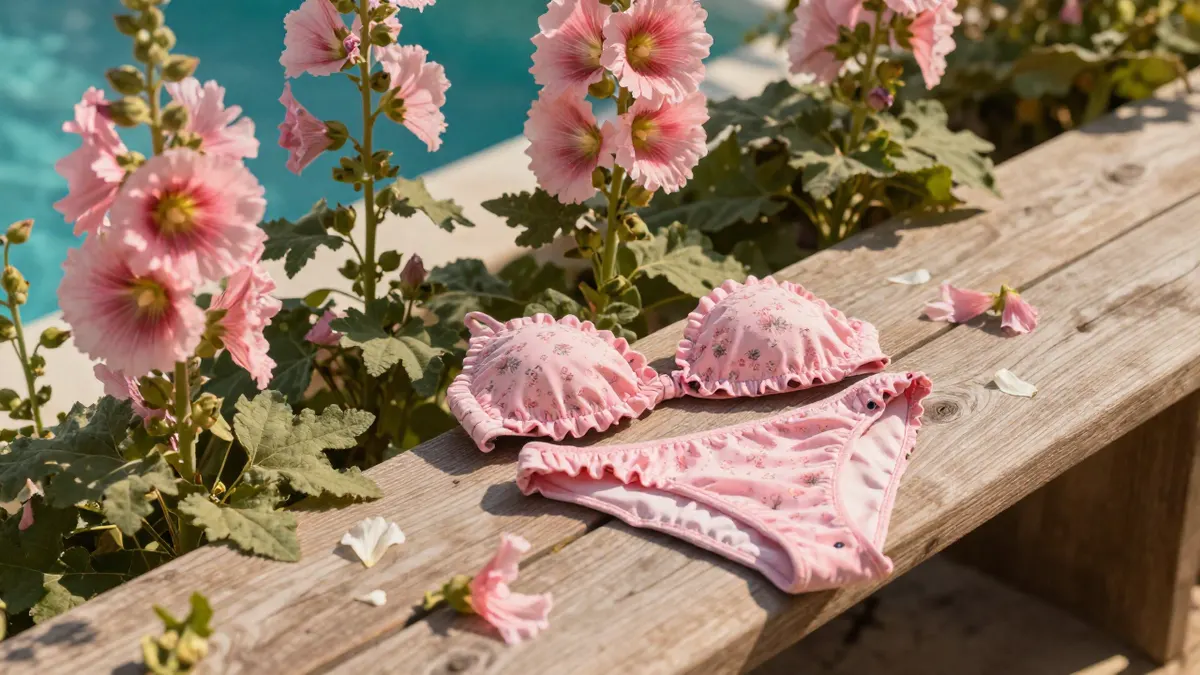
An alcea rosea bikini is a two-piece swimsuit decorated with the common hollyhock, a tall garden flower with ruffled, saucer-shaped blooms. There is no single official style. The name covers any top and bottom set that borrows the flower's colors or shapes, from a faded floral print to a solid dusty pink with ruched edges.
This page explains what to expect from such a suit, how to judge the print and the fabric, and how to keep the colors from dying after a single summer.
What an Alcea Rosea Bikini Actually Looks Like
Hollyhocks grow on stems that reach 1.5 to 2.5 meters, so prints often lean vertical. Look for stacked blooms running down a bottom or across a bandeau, with green leaves as a backdrop. Others zoom in and show one oversized flower per panel.
The palette is the easy part to recognize. Typical shades include:
- Soft pink and blush, the classic garden tone
- Deep burgundy that reads almost black in shade
- Butter yellow with a darker center
- White with a pale pink edge
Hollyhock petals are crinkled, like tissue paper. Designers echo this with ruffles, gathered side seams or crinkle fabric. If a listing mentions texture and a print together, that is usually the closest match to the flower.
Fabrics and Cuts That Suit a Floral Print
Most good swimwear uses a blend of about 80 percent nylon and 20 percent elastane. Recycled versions of this blend are common now and feel the same on the skin. A lining of at least a half layer in the front keeps pale pinks from turning see-through when wet.
Busy prints work best on simple shapes. A triangle top with ties, or a bralette with a straight neckline, lets the flowers do the talking. Heavy ruffles on top of a loud print tend to look crowded.
For the bottoms, pick by coverage:
- Tie-side bottoms adjust by a full size and suit changing waistlines
- High-leg cuts lengthen the line of the leg
- Mid-rise briefs give the most coverage for active beach days
Print scale and body shape
Large blooms add visual volume, small ones calm it down. If you want a fuller look on a slim frame, go big. If you prefer something quieter, choose a ditsy scatter where the flowers are under 3 centimeters wide.
Price Range You Can Expect
Prices are only a rough guide. Mass-market floral sets start at around 20 to 35 USD per piece. Mid-range labels using recycled fabric sit near 50 to 90 USD. Designer sets with hand-finished details can pass 150 USD for a top and bottom together.
A higher price does not always mean better wear. Check the lining, the stitching on the straps and the stretch recovery instead.
Caring for a Pink or Burgundy Print
Reds and deep pinks fade first. Rinse the suit in cool fresh water within an hour of leaving the pool or sea, since chlorine and salt both strip dye. Hand wash with a mild soap, press out the water without wringing, and dry flat in shade.
Direct sun on a drying rack can dull a print in a few weeks. Sunscreen with oil also leaves stains on light fabric, so apply it 15 minutes before you dress.
Rotate two suits if you swim often. Elastane needs about 24 hours to recover, and a suit worn daily loses shape much sooner, often after one season.
Similar Flower-Inspired Styles
If hollyhock tones are not quite right, other botanical sets cover different moods. The Acacia bikini leans toward warm yellows and fine leaf patterns. A Candytuft bikini uses small white and lilac clusters, which suits a softer look. The Mandevilla bikini goes brighter, with rich pink trumpet-shaped blooms. To compare more cuts and prints side by side, browse the wider bikini collection.
Frequently Asked Questions
Is alcea rosea the same as hollyhock?
Yes. Alcea rosea is the botanical name of the common hollyhock. In swimwear, the name is just a label for floral designs inspired by it.
Which color is the most typical?
Pink is the most familiar, followed by deep burgundy and pale yellow. Black-toned burgundy is the hardest to find in swimwear.
Will a floral bikini look see-through when wet?
Light colors can, especially thin single-layer fabric. Look for a lined front and test the fabric by stretching it against the light.
How long does a printed bikini last?
With rinsing and flat drying, expect about two to three summers of regular use. Daily chlorine exposure can cut that to one season.