Aconite One Piece Swimsuit: Cut, Fit and Care Guide
The Aconite one piece is a swimsuit built around a simple idea: a clean silhouette that works in the pool, on the beach and on a boat deck. This guide covers what to expect from the cut, the fabric, the sizing and the upkeep, so you can judge whether the style fits how you actually swim.
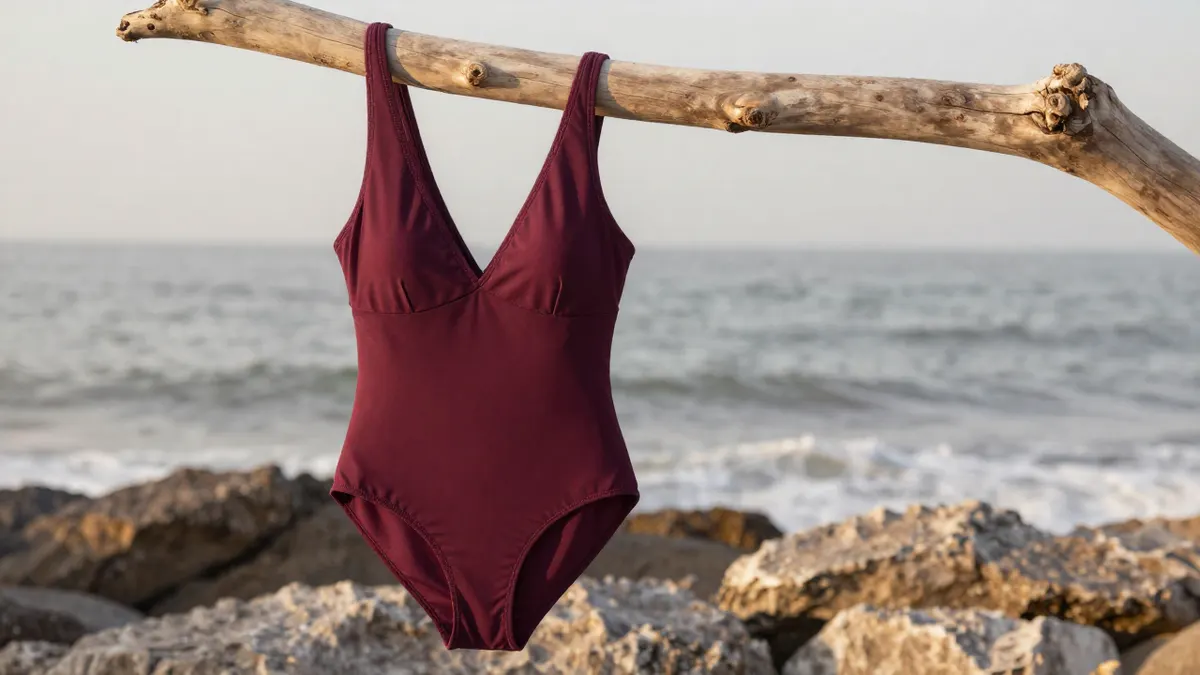
What the Aconite one piece looks like
Expect a classic maillot shape with a scooped neckline, a moderate leg opening and a back that sits lower than a standard racerback. Coverage is medium. It shows some shoulder and some back, yet it stays put when you move.
Most one pieces in this category use a lining across the front panel and sometimes a light bust support. The lining matters more than people think. Without it, pale colors turn see-through once wet.
- Neckline: rounded or softly scooped
- Straps: fixed, usually 1.5 to 2 cm wide
- Leg cut: mid-height, neither high nor full brief
- Back: open or semi-open, depending on the color version
Fabric and feel
Swimwear of this type is typically a blend of about 80 percent polyamide (nylon) and 20 percent elastane. That ratio gives good stretch and recovery. A suit with less than 15 percent elastane tends to bag out at the hips after a season.
Polyamide dries faster than cotton blends and feels smoother on the skin. It is also more sensitive to sunscreen oils and chlorine than polyester. If you swim laps, a polyester-based suit lasts longer, so check the label before you assume.
Sizing the Aconite one piece
Measure three things: bust, waist and hip. Then compare them with the size chart for the style, not with your usual clothing size. Swimwear sizes run small more often than not.
Torso length is the measurement most people skip. Run a tape from the top of your shoulder, down through the crotch and back up to the same shoulder. For many adults this lands between 140 and 160 cm. If you are above that range, a one piece can pull on the straps and feel short in the body.
Between two sizes
Go up if you have a fuller bust or a long torso. Go down only if the fabric has a high elastane share and you want a firmer hold. A suit that feels slightly snug dry will relax by about half a size in water.
How it compares with similar styles
If you want more coverage in the back and a sportier line, the Alcatraz one piece is a useful point of comparison. For a softer, more decorative look, the Bellis one piece sits at the other end. A broader overview of cuts, necklines and fabrics is available in the guide to one piece swimsuits.
The Aconite sits between those two. It is plainer than a ruched or cut-out suit, which makes it easier to pair with a sarong or a beach dress.
Styling and use
A one piece with a scooped back pairs well with high-waisted linen trousers or a light wrap skirt. For travel, it also doubles as a bodysuit under a shirt, a trick that saves space in hand luggage.
For active days, such as snorkeling or paddleboarding, choose a darker shade. Dark navy and black hide sand, sunscreen marks and water stains far better than white or pastel tones.
Care and lifespan
Rinse the suit in cool fresh water within an hour of leaving the sea or pool. Salt and chlorine weaken elastane quickly, especially in the heat.
Wash by hand with a mild soap, then press out the water without wringing. Dry it flat in the shade. Direct sun fades dyes, and a tumble dryer can ruin the stretch in a single cycle. With this routine, a good swimsuit keeps its shape for roughly two to three summers of regular use.
Frequently Asked Questions
Is the Aconite one piece suitable for swimming laps?
It can handle casual lengths, but it is not designed for daily training. Chlorine wears down nylon blends faster than it does polyester. For regular lap swimming, a chlorine-resistant fabric is the safer choice.
Does it offer bust support?
Light support is typical for this cut, often through a lined front panel or removable cups. It suits A to C cups comfortably. Larger busts usually need underwire or wider straps for a secure fit.
Will the color fade?
Any swimsuit fades with time, mostly from sun, sunscreen and chlorine. Rinsing after each wear and drying in the shade slows this down a lot. Darker colors usually show less visible wear.
How do I know if the lining is thick enough?
Hold the fabric up to a bright window and stretch it slightly. If you can see your hand clearly through it, it will be sheer when wet. Double-layered fronts are the better sign.