Jaya Sunglasses: What to Know Before Choosing a Pair
Jaya sunglasses usually refers to a beach-oriented style: a rounded or softly squared frame, tinted lenses and a lightweight build meant for sand, pool decks and boat days. The name appears on several listings, so the details below matter more than the label. Frame width, lens category and UV rating decide whether a pair is comfortable and safe, whatever it is called.
This page is an independent guide. It sells nothing and takes no orders, it simply explains what to look for.
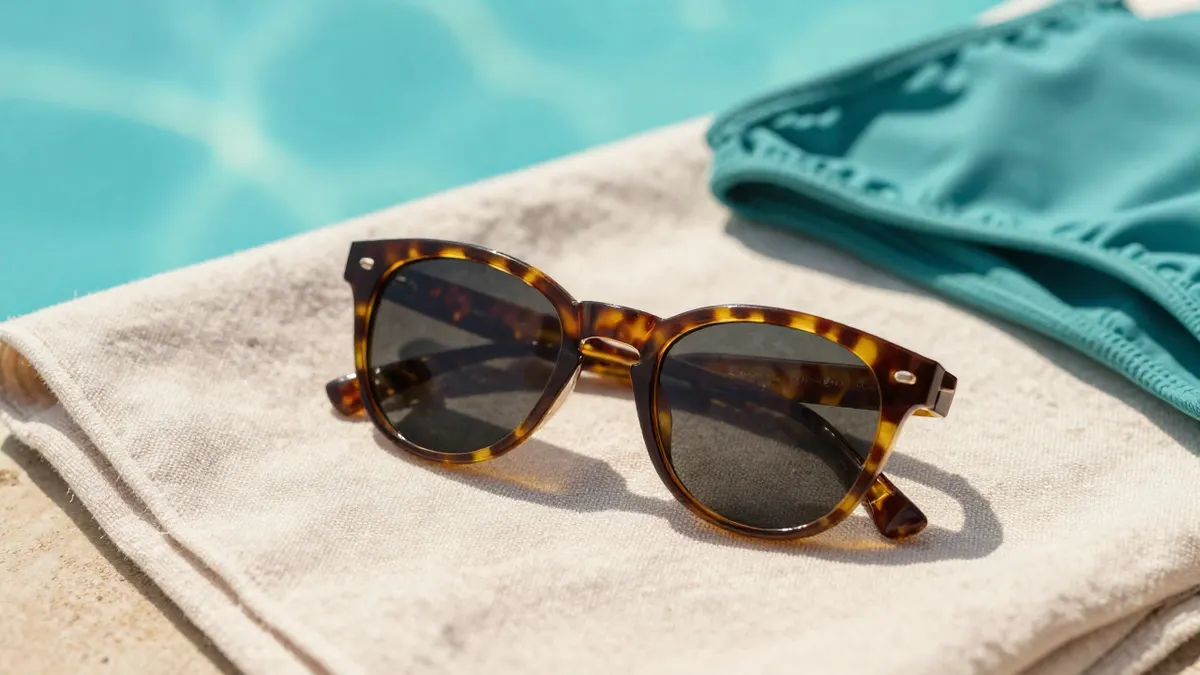
Jaya sunglasses: typical design and sizing
Most pairs in this style follow a similar pattern. Expect a total frame width of about 138 to 146 mm, a lens width near 52 to 58 mm and a bridge of roughly 16 to 20 mm. Temple arms tend to run 140 to 145 mm.
These numbers are usually printed on the inside of an arm, in a format such as 55-18-143. Check them against a pair you already wear comfortably. If your current glasses are 140 mm wide and sit well, stay within 4 mm of that.
A narrow face suits a lens width under 54 mm. A wider face does better above 56 mm, otherwise the arms press on the temples after an hour.
Shape and face fit
Rounded frames soften angular jawlines. Squarer shapes balance a round face. Oversized cat-eye lines look good with a high ponytail, but they slide on a sweaty nose, so a bridge with silicone pads helps.
Lens quality and UV protection
Look for the words UV400 or "100% UVA/UVB protection". That means the lens blocks light up to 400 nanometres. A dark tint alone does nothing against UV. A dark lens without a filter is actually worse, because your pupils widen and let in more radiation.
Lens category is the second thing to check. Category 3 (absorbing 80 to 92% of visible light) is the standard for beach and pool use. Category 4 is for glaciers and high mountains and is not legal for driving.
- Polarized lenses cut glare off water and wet sand, which helps on a boat.
- Non-polarized lenses cost less and are fine for lounging.
- Mirror coatings reduce brightness further but scratch more easily.
Cheap fashion pairs sold at about 10 to 20 USD often skip proper UV testing. A tested pair from a known optical maker generally starts around 40 USD and goes well past 100 for polarized glass lenses.
Materials and durability near salt and sand
Acetate feels solid and holds colour, but it is heavier, around 30 to 40 g. Injected plastic and nylon frames weigh 20 to 28 g and tolerate heat in a car better. Metal hinges rust in salt air unless they are stainless steel.
Rinse the pair in fresh water after every sea swim. Dry it with a microfibre cloth, never a T-shirt, since sand grains scratch coatings. A hard case is worth having, because a soft pouch does not stop a bag from crushing the frame.
Matching sunglasses with swimwear
A simple rule works well: keep either the frame or the swimsuit as the statement, not both. A bold tortoiseshell frame suits a plain black one-piece. Clear or pale frames go with printed pieces, such as the Marigold bikini in its warm yellow tones.
For a day that moves from sea to lunch, a lightweight cover-up does the job. A crochet beach dress in white or sand pairs naturally with brown gradient lenses, while grey lenses look cleaner against cool blues and greens.
If you are still deciding on the swimwear itself, browsing the bikini collection first helps, since the colour of the suit should guide your choice of tint. You can also look through all swimwear products to compare cuts before settling on accessories.
Spotting a fake or poorly made pair
Names like Jaya get copied. A few quick checks save money:
- Hold the lens against a straight line, such as a door frame. If the line bends as you move the glasses, the lens is distorted.
- Look for a printed size code and a CE or UKCA mark on the arm.
- Test hinges. They should open smoothly and stay put, not wobble.
- Be wary of a seller that gives no UV rating at all.
A cheap UV test card or a simple UV lamp at an optician can confirm the filter in a couple of minutes, often for free.
Frequently Asked Questions
Are Jaya sunglasses polarized?
It depends on the specific listing, since the name is used by different sellers. Check the product description or the tag for the word "polarized". If it is not stated, assume the lenses are not.
What lens colour is best for the beach?
Grey keeps colours true and suits very bright light. Brown and amber add contrast and are easier on the eyes over long days. Green sits between the two. Category 3 is the right strength for most seaside use.
How do I know the glasses will fit my face?
Compare the three numbers printed on the arm (lens width, bridge, arm length) with a pair you already own. A difference of more than 4 mm in total width usually feels noticeable. The glasses should not pinch behind the ears or slip when you look down.
Can I wear them in the water?
Most are not made for swimming. Salt and chlorine damage coatings, and the frames do not float unless labelled so. For paddleboarding or kayaking, use a retainer strap and rinse them afterwards.