Bird of Paradise One Piece: What to Look For
A bird of paradise one piece usually means a swimsuit printed with the flower of the same name (Strelitzia), or with the tropical birds that inspired it. Orange, deep blue and leaf green dominate. The print is bold, so the cut and the fabric decide whether the suit looks good or just loud.
This guide covers the print styles, the cuts that suit different bodies, fabric specs worth checking, and how to keep a saturated print from fading.
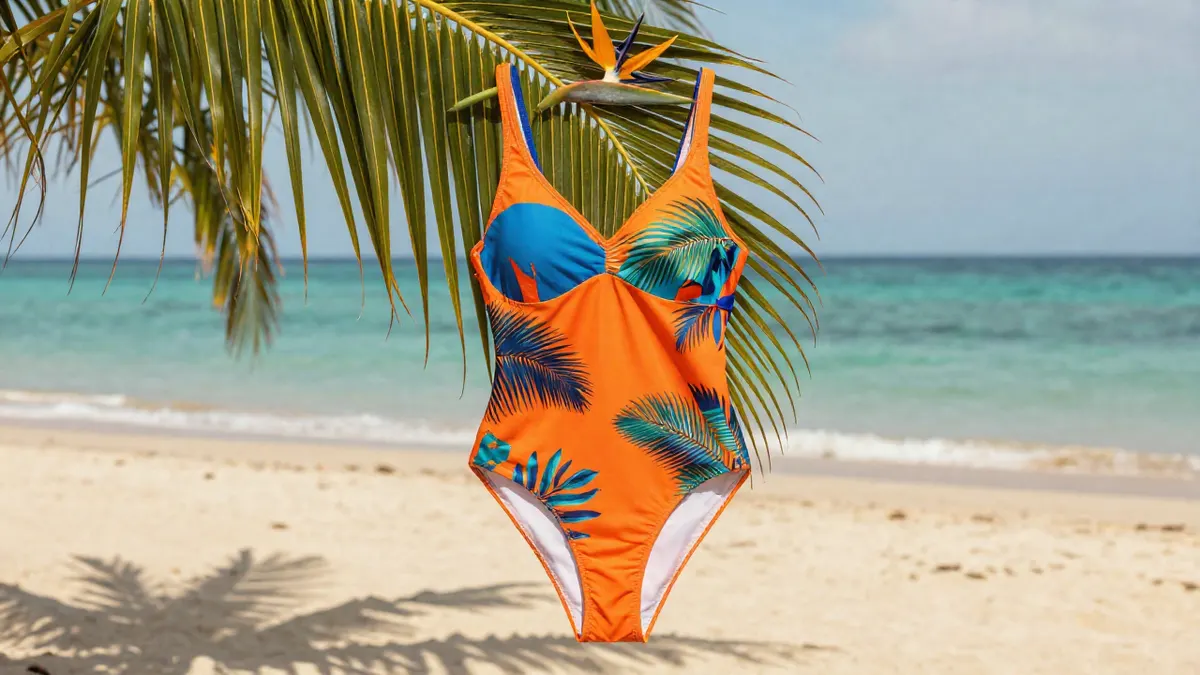
What a bird of paradise one piece looks like
Most versions fall into two families. The first is the botanical print, with spiky orange and blue petals on a dark green or black ground. The second is the graphic print, where the flower is flattened into shapes and repeated across the fabric.
Botanical prints read as dressy. They look best on plain, structured cuts because the pattern already does the talking. Graphic prints are easier to wear on the beach all day, and they hide sunscreen marks and small stains better.
Placement matters more than people expect. A large flower centered on the stomach draws the eye to the middle of the body. A print that wraps diagonally from hip to shoulder is more forgiving and tends to flatter most shapes.
Choosing the right cut
With a loud print, keep the silhouette simple. Four cuts cover most needs:
- Scoop or round neckline with full back coverage, good for swimming laps and active days.
- Halter neck with a tie, which gives bust support and lets you adjust the fit.
- Wrap front with a ruched waist, the most flattering option if you want definition without a tight band.
- High leg with a low back, a more fashion-led shape that suits a sunbed better than a surf break.
If you have a long torso, look for a suit with a torso length of at least 60 cm in a size M, or a wrap style that can be tightened. Short torsos do well in high-leg cuts, which visually lengthen the body.
Fabric and construction checks
Look at the composition label first. A good swimsuit fabric is around 80 percent polyamide (nylon) and 20 percent elastane, or a recycled equivalent. That ratio holds its shape and dries fast, in about one to two hours in sun.
Lining is the second check. A full lining in the front and a half lining at the back is standard. Orange and white-based prints can turn see-through when wet, so hold the fabric up to the light before you trust it.
Removable bust pads are useful, but cheap ones bunch up after a few washes. Sewn-in cups last longer, though you cannot take them out.
Sizing a one piece with a busy print
Measure bust, waist and hips, then compare against the size chart rather than your usual clothing size. Swimwear runs smaller than street wear by roughly one size in many cases. When between sizes, go up if the suit has no adjustable straps, and stay down if it has ties or a wrap.
Patterns stretch with the body. A print that looks sharp on a hanger can distort at the hips if the suit is a size too small, so a slightly relaxed fit shows the design better.
Similar styles worth comparing
If the tropical idea appeals but the exact print does not, a few other prints follow the same logic. A Bromeliad one piece tends to use denser, spikier leaf shapes in pink and green. An Alcatraz one piece goes for a more graphic, monochrome look. For a broader view of cuts and fits, the overview of one piece swimsuits covers necklines, coverage levels and fabric types side by side.
Coordinating a cover-up is easier than it seems. Pick a solid in one of the print's minor colors, such as a soft sand or a deep teal, and avoid a second pattern. A plain linen shirt or a sarong does the job and costs around 25 to 60 USD in most price ranges.
Caring for a saturated print
Bright oranges fade first. Rinse the suit in cool fresh water right after chlorine or salt exposure, ideally within an hour. Wash by hand with a mild soap, never with fabric softener, which breaks down elastane.
Dry it flat in the shade. Direct sun for a full afternoon can dull the color noticeably over a season, and a tumble dryer shortens the life of the elastic. With this routine a decent suit lasts two to three summers of regular use.
Where it fits in a swimwear wardrobe
One bold print is plenty. Pair it with a solid black or navy suit for days when you want something quieter. If you also like separates, the styles covered under Granadilla swimwear show how a printed top can mix with plain bottoms, which stretches a small packing list further.
Frequently Asked Questions
Is a bird of paradise print suitable for all skin tones?
Yes, because the palette contains both warm and cool colors. Orange and blue sit well against deeper skin and against fair skin alike. The ground color matters more: black or deep green gives the strongest contrast.
Will the colors run in the wash?
Good quality prints are set at the factory, but dark blues and oranges can bleed slightly the first time. Rinse it alone in cold water before the first wear. Never soak it with light-colored items.
Can I wear it for swimming laps or sports?
A scoop neck with a racerback or full back handles it well. Wrap and low-back styles tend to shift with hard movement. Chlorine wears bright fabric faster, so a chlorine-resistant blend helps in a pool.
How do I stop the suit from looking sheer?
Check for a full front lining and a lighter tone only in the print, not as the base color. Do the light test in daylight and stretch the fabric slightly. If you can see your hand through it, skip it.