Candytuft Bikini: A Practical Guide to the Floral Swimwear Look
A candytuft bikini takes its name from Iberis, a low garden plant that produces dense, rounded clusters of tiny white, pale pink or lilac flowers. In swimwear, the name usually points to a small-scale floral print, often white or blush blossoms on a green, navy or sand background. This page explains what to look for in that style, how to pick a cut, and how to keep the print looking fresh.
Expect variation. Since "candytuft" is a descriptive name rather than a fixed standard, two swimsuits sold under it can look quite different. Check the photos, not only the label.
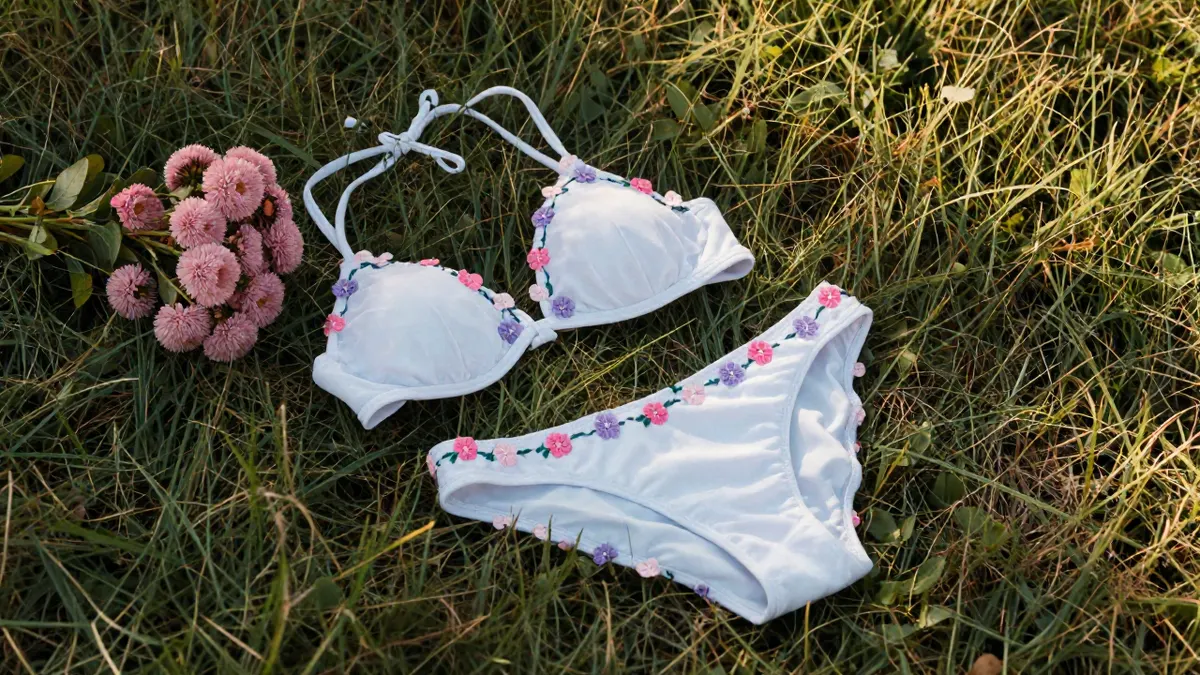
What a candytuft bikini print usually looks like
The real flower grows in tight domes about 20 to 30 cm tall, and prints borrow that density. Think clusters of four-petal blooms, each only 5 to 15 mm across on the fabric, packed close enough to read almost as texture from a distance.
Three colour families dominate. White on deep green feels crisp and a little botanical. Pale pink on cream is softer and suits lighter skin tones and tan lines alike. Lilac on navy is the most dramatic of the group.
Small prints hide fewer details than people assume. Up close, a poorly registered pattern shows blurry petals, and cheap digital printing can fade around seams within a season.
Choosing the right cut
The print is busy, so the shape should stay simple. A triangle top with adjustable ties works on most chests and lets you fine-tune coverage. For larger cup sizes (D and above), a underwire or bandeau-with-support style holds better during swimming.
Bottoms
Classic side-tie bottoms give the most flexibility, since you can raise or lower them by 2 to 3 cm. Mid-rise briefs offer more coverage and stay put when you move. High-leg cuts lengthen the line of the legs but show the print less.
Tops
Bralette tops suit casual beach days. Bandeau tops reduce strap marks but slip in water, so keep them for sunbathing. If you plan to swim laps or surf, pick a racerback or a wrap design with secure ties.
Fabric, lining and care
Look for a blend of roughly 80% recycled nylon and 20% elastane, or polyamide with a similar ratio. It resists chlorine better than cheap polyester and keeps its stretch. A full lining matters with light backgrounds, because white and cream fabrics can turn see-through when wet.
Rinse the suit in cool, fresh water within an hour of leaving the sea or pool. Hand wash with a mild soap, never wring it, and dry it flat in the shade. Direct sun fades pink and lilac faster than any other colours, sometimes noticeably after only 10 to 15 days of heavy use.
Avoid hot tubs. Heat of 38 degrees or more, plus chemicals, shortens elastic life.
Styling a candytuft bikini
Let the print lead. A plain linen shirt, a straw hat and neutral sandals are enough. Solid sarongs in white, sage or sand pick up the flower colours without clashing.
If you like floral swimwear in general, compare it with a Nigella bikini, which tends to use feathery blue-toned motifs, or an Alcea rosea bikini, built on larger hollyhock blooms. A Catmint bikini sits closer to candytuft in scale, with soft lavender tones. For a wider view of styles and silhouettes, browse a general bikini collection and note which prints repeat across them.
Price expectations
Floral bikinis with decent lining and recycled fabric generally start at around 45 to 60 USD per set. Premium designer versions can pass 120 USD. Anything below about 20 USD often means thin fabric and a print that fades quickly. These are rough guides only and vary by season and region.
Frequently Asked Questions
Is candytuft bikini a specific brand or style?
No single standard exists. The term describes a small, clustered floral pattern inspired by the Iberis plant. Colours and cuts vary from one design to another.
Does a white floral print go see-through?
It can, particularly on thin, unlined fabric. Choose a fully lined top and bottom, and hold the fabric up to a light before wearing it. Darker backgrounds are safer.
How long does a floral bikini last?
With regular use and good care, expect two to four summers. Chlorine, sun and heat shorten that, so rinse after every swim and avoid long hours in direct sunlight while wet.
Which body types suit a small floral print?
Nearly all of them. Small patterns are forgiving because they do not stretch into large shapes. Adjust the cut for support and coverage rather than the print.